Who is Shiva?
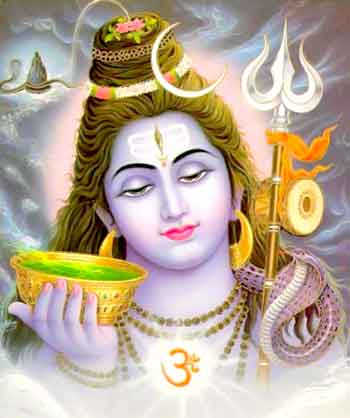
Shiva means auspicious, pure, kind and gracious. In English it is written both as
Siva and Shiva. Ancient Hindu scholars such as Shankaracharya interpreted the name
variously as the "Pure One", or "One who is not affected by the Gunas
of Prakrti (Sattva, Rajas, and Tamas)" or "One who purifies everyone when
His name is uttered." The Hindu tradition which recognizes Lord Shiva as the
highest supreme Brahman is known in English as Shaivism or Saivism. It is one of the
oldest traditions of Hinduism, whose antiquity probably dates back to pre Rigvedic
period and rooted in the fertility cults of prehistoric world. Apart from Shaivism,
Shiva is also worshipped in the sects of both Tantrism and Shaktism.
According to Swami Chinmayananda, Shiva means "One who is eternally pure"
or "One who can never have any contamination of the imperfection of Rajas and
Tamas". The name Shiva, in one interpretation, is speculated to have derived
from the Dravidian or Tamil word Siva, meaning "to be red." As the
principal deity of Shaivism, Shiva is known by such epithets as Mahādeva
("Great God" — mahā = Great + deva = God), Maheśhvara
("Great Lord" — mahā = Great + īśhvara = Lord), and
Parameśhvara ("Supreme Lord").
His followers worship Him by uttering his 108 or 1008 names. There are at least
eight different lists of the Shiva Sahasranama, devotional hymns (stotras) listing
his many names. The list taken from the Book 13 (Anuśāsanaparvan) of the
Mahabharata is considered to be the standard version. The list of Shiva’s
10000 names (dasa-dahasranama) is the Mahanyasa. Satarudriyam, popularly known as
liturgy to Shiva (Shri Rudram Chamakam), is also used to extol the greatness of
Shiva during his ritual worship. The leaves of the bilwa tree are used in his
worship as they are considered to be his favourite.
Explore AllSaivism.com
Essays on Shaivite philosophy, scripture, saints, and practice.
Kashmir Shaivism, Saiva Siddhanta, Vira Saivism, Tantrism, and more.
Our resources, Shiva temples, podcasts, and curated external links.